

Introduction
The debate surrounding assisted dying, also known as assisted suicide or euthanasia, has intensified in the United Kingdom in recent years, particularly with the progression of the Terminally Ill Adults (End of Life) Bill through Parliament. As of January 2026, the bill has passed its second reading in the House of Commons and is undergoing scrutiny in the House of Lords, where significant opposition has emerged during committee stages. Peers such as Lord Stevens, a former NHS chief executive, have voiced concerns that the legislation could undermine public trust in clinicians, pressure individuals to end their lives for altruistic reasons like protecting the NHS, and fail to ensure adequate funding for palliative care.
Similarly, Baroness Hollins has highlighted the lack of clinical trials for fatal substances proposed under the bill, describing assisted suicide as a potential national scandal.
Nikki da Costa @nmdacosta details parliamentary horror at the bill’s implications, including the empowerment of ministers to introduce systems like ‘Assisted Death Navigators’ that could accelerate the process to as little as 18-30 days.
This article examines the theories for and against assisted dying, drawing on recent discussions and research. It incorporates insights from human development and ageing theories to explore how such legislation might interplay with life’s natural progression. Furthermore, it addresses historical parallels with eugenics, which rose in popularity before declining due to Nazi associations but now appears to be resurfacing in modern end-of-life policies. Ultimately, it argues that assisted dying legislation should never be permitted, as it risks devaluing human life, coercing the vulnerable, and diverting resources from life-affirming care.
Arguments in Favour of Assisted Dying
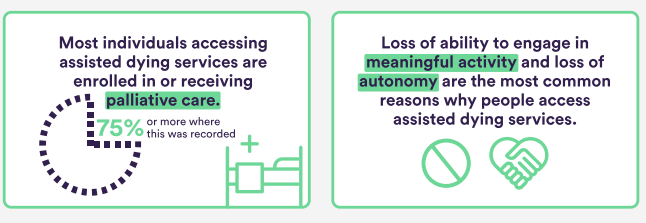
Proponents of assisted dying emphasise individual autonomy and compassion as core principles. A key argument is that terminally ill adults should have the right to end unbearable suffering on their own terms, preserving dignity and control at the end of life. For instance, organisations like Dignity in Dying assert that the majority of the public, including many disabled people, support legalisation for mentally competent, terminally ill adults, citing evidence from jurisdictions like Oregon and Switzerland where safeguards reportedly function effectively. (However, in the context of the specific UK bill(s) in recent years, public statements from prominent disability charities and coalitions show near-unanimous opposition or deep concern rather than any form of support, many virulently oppose the Bill.)

They argue that current UK laws force individuals to travel abroad for assistance or endure prolonged pain, which they claim is inhumane. Another perspective highlights the potential for regulated assisted dying to alleviate mental anguish, allowing families to prepare for a peaceful farewell rather than witnessing prolonged agony.
Supporters contend that strict eligibility criteria, such as prognosis of six months or less to live, multiple medical assessments, and cooling-off periods, can prevent abuse, making the process safer than the status quo of unregulated suicides. In the UK context, MP Kim Leadbeater, who introduced the bill, has framed it as a means to reduce human suffering, arguing that palliative care alone cannot always eliminate extreme pain. However, the bill itself contains no mention of pain or suffering in its text.
Arguments Against Assisted Dying
Opposition to assisted dying is rooted in ethical, practical, and societal concerns. A primary argument is the sanctity of life, where intentionally ending a life breaches fundamental medical ethics like the Hippocratic Oath’s directive to ‘do no harm’. Critics, including the British Medical Association, warn of a slippery slope: once legalised for terminal illnesses, eligibility often expands to chronic conditions, mental health issues, or even children, as observed in Canada and Belgium.
In Canada, medical assistance in dying (MAID) has risen thirteenfold since legalisation in 2016, with a 30% increase from 2020 to 2021, now accounting for over 4% of all deaths, including expansions to non-terminal conditions like mental illness. In Belgium, euthanasia rates have increased, with regional trends showing faster growth in French-speaking areas, and cases now including psychiatric disorders and dementia, raising concerns about broader application beyond initial intents. In the Netherlands, euthanasia and assisted suicide cases totalled over 3,000 in 2010 (2.3% of deaths), with expansions to children and those with mental health issues.
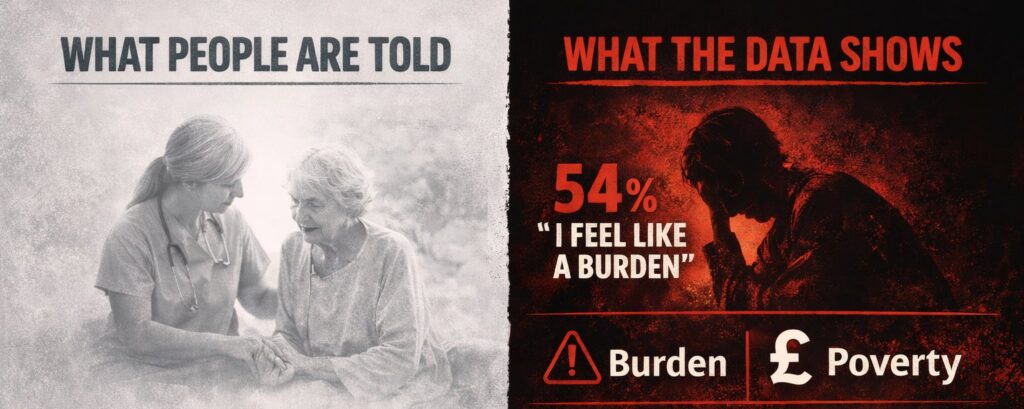
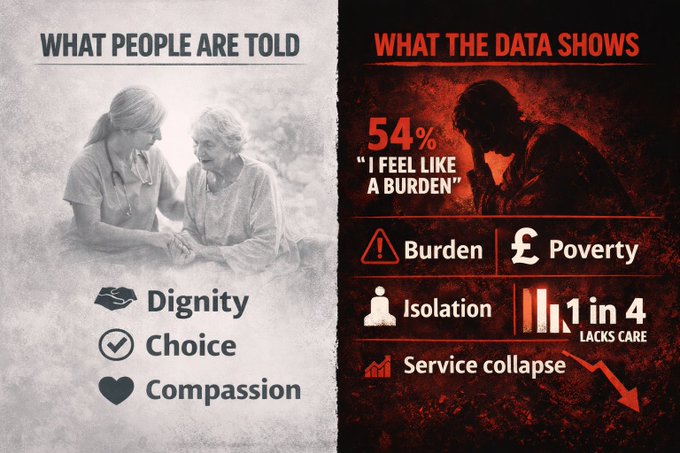
This could lead to coercion of vulnerable groups, such as the elderly or disabled, who might feel burdensome amid inadequate social support. A key societal concern is that many individuals opt for assisted dying not primarily due to unbearable pain, but because they perceive themselves as a burden on family, friends, or caregivers, a reason cited by 54% in Oregon’s 2021 report, up from earlier years, with 8% also mentioning financial concerns. In Washington State, 61% of those choosing assisted suicide in 2013 cited fear of being a burden.

“Most assisted deaths are driven by social and economic pressure — not pain.”
Critics argue this highlights how socio-economic pressures, rather than medical necessity, drive decisions, potentially exacerbating vulnerabilities. For instance, lack of access to care is a significant factor, as noted:
“Of course nobody wants the absence of palliative care to be the reason you apply, but we have to give everybody this choice on the basis of the way the world is for them.” (Falconer, Hansard, Jan 9).
Poverty influences choices, with concerns that “Where the reason… is because in your mind you are influenced by your circumstances—for example, because you are poor?—should you be barred from having an assisted death…? In my view [you should] not.” (Falconer, Hansard, Nov 21).
Mental illness plays a role, as “Anyone… subject to a psychotic condition or other mental illness that causes episodic or chronic suicidal ideation… If you do have capacity and it is your wish, you should be entitled to an assisted death.” (Falconer, Hansard, Jan 16).
Financial worries are cited: “Choice is the key thing. Your financial position might be an element in what makes you reach a decision.” (Falconer, Hansard, Jan 16).
Feeling like a burden is emphasised: “There are people who have said to me… ‘surely being concerned about being a burden is a legitimate reason… I know I wouldn’t want to be a burden.'” (Leadbeater, The News Agents, Nov 25 2024).
To save on care costs for family: “They might well apply because there is only a limited amount of money to go around.” (Falconer, Hansard, Jan 16)
“It comes down to a question of autonomy.” (Leadbeater, Hansard, Feb 12 2025).

These reasons underscore fears that assisted dying could pressure individuals facing economic hardship, inadequate support, or mental health challenges into premature death, rather than addressing underlying issues. Practical issues include the strain on the NHS, where assisted dying might divert funds from palliative care, which is already under-resourced, one in four people in the UK may not receive the palliative care they require, with two-thirds of adult hospices in England recording deficits in 2023-24, leading to service cuts and staff reductions.
Health professionals in the UK and abroad highlight additional risks, such as complications in the process: in Oregon, time from drug ingestion to death can range from 1 minute to 47 hours in 2024, with past cases involving regurgitation, seizures, and prolonged dying (e.g., one patient took 104 hours), and 20% of patients showing symptoms of depression. In Canada, 26.5% of MAID requests in 2022 did not result in death, sometimes due to withdrawals or ineligibility. Many UK doctors oppose changes allowing physicians to initiate discussions, fearing it erodes trust, while international experiences show abuses like inadequate oversight.
Peers in the House of Lords have criticised the bill for potentially normalising state-sanctioned killing, undermining trust in healthcare professionals. Equality impact assessments note disproportionate risks to older and disabled individuals, with no robust mechanisms to detect coercion. Groups like Care Not Killing argue that alternative treatments and improved palliative care make assisted dying unnecessary and dangerous, pointing to Oregon’s data gaps and complications as evidence of harms.
Recent discussions echo these fears: many opponents, including several prominent figures, have highlighted rejected amendments for stronger safeguards, suggesting the bill prioritises speed over protection. Disabled individuals have expressed serious concerns about eugenicist undertones, fearing heightened discrimination in healthcare.
The Interplay of Human Development and Ageing Theories
Human development theories provide insight into how assisted dying might affect individuals across the lifespan, particularly in ageing. Below is a table summarising key theorists and their relevance:
Arnold Gesell: Maturation Theory
- The Maturation Theory emphasises genetically programmed changes, like menopause or physical decline in old age. Assisted dying could prematurely interrupt natural maturation, ignoring environmental influences that might enhance quality of life despite decline.
Albert Bandura: Social Learning Theory
- Suggests behaviours are learned through observation. If assisted dying becomes normalised, vulnerable elders might ‘learn’ to view death as a solution to burdens, reinforced by societal pressures rather than personal resilience.
The Diathesis-Stress Model; Relationship between Nature and Nurture
- Posits that genetic vulnerabilities interact with stressors to impact wellbeing. In ageing, stressors like poverty or isolation could push those with predispositions towards mental health issues to opt for assisted dying, exacerbating inequalities.
Paxton and Dixon: Impact of Low Income
- Low-income individuals face underachievement and health risks. Assisted dying might disproportionately affect the poor, who lack access to palliative care, turning economic disadvantage into a ‘death sentence’.
Holmes and Rahe: Social Readjustment Rating Scale
- Measures stress from life events. Ageing events like bereavement could accumulate, making older people far more susceptible to choosing death under duress, ignoring individual coping variations.
Elaine Cumming and William Earle Henry (with Bromley): Social Disengagement Theory
- Argues older people naturally withdraw from society due to health decline. Assisted dying might accelerate this disengagement, validating isolation rather than promoting engagement.
Robert Havighurst: Activity Theory
- It completely contrasts disengagement by advocating active roles in later life, like hobbies or volunteering, and sharing skills across generations. Legislation could undermine this by offering death as an ‘easy out’, reducing incentives for societal adaptations that boost wellbeing.

These theories interplay by showing how early development (e.g., Bowlby’s attachment theory fostering emotional resilience) influences later-life decisions. Secure attachments build resilience against stressors, potentially reducing the appeal of assisted dying. Cognitive theories like Piaget’s highlight mature decision-making, but ageing impairments could impair true autonomy, risking coerced choices.
The Shadow of Eugenics: Historical Parallels and Modern Concerns
Eugenics emerged in the late 19th century, popularised by Francis Galton in the UK and adopted in the US for sterilisation laws to ‘improve’ human stock. It gained traction pre-WWII but declined after Nazi Germany weaponised it for mass sterilisations and the T4 euthanasia programme, killing over 200,000 disabled individuals as ‘life unworthy of life’.
Post-war, eugenics was discredited due to its association with genocide. Today, some view assisted dying as a subtle revival, devaluing lives deemed burdensome, echoing Nazi euthanasia of the ‘unfit’. In Canada, expansions to include mental illness raise fears of targeting marginalised groups. Critics argue UK bills risk similar paths, normalising death for the vulnerable under compassionate guises.

Why We Must Oppose Assisted Dying Legislation
In my view, assisted dying should never be legislated. It erodes the sanctity of life, opening doors to abuse and coercion, as seen in international expansions. Rather than hasten death, we should invest in palliative care to affirm life. Theories like the activity theory underscore the value of engagement in ageing, which legislation undermines. Eugenics’ history warns of devaluing certain lives, and current bills lack safeguards, straining the NHS and breaching ethics. True compassion lies in support, not state-sanctioned ending.

During my time working in palliative and end-of-life care, I witnessed first-hand how effective pain management can transform the final stages of life. If pain is properly managed through comprehensive palliative approaches, no one should die in pain; modern medicine offers tools like advanced analgesics, psychological support, and holistic therapies that address not just physical but emotional and spiritual distress.
Too often, calls for assisted dying stem from one bad family experience or isolated cases of inadequate care, but these should not be reasons to push for state-sanctioned death, instead, they highlight the urgent need to improve and fund palliative services nationwide, ensuring dignity without resorting to lethal interventions.
Conclusion
Assisted dying promises choice but delivers peril, masquerading as compassion while undermining the foundational moral and ethical principles of human dignity, and societal protection; principles that transcend religious beliefs and rest on secular humanism, philosophy, and evidence-based concerns.
Research from jurisdictions like Canada demonstrate a stark slippery slope, with expansions to non-terminal conditions including mental illness, leading to cases where poverty, isolation, and perceived burdens drive decisions rather than unbearable pain. In Belgium, euthanasia rates have escalated, incorporating psychiatric disorders and dementia, with a recent study showing a 20-fold increase in psychiatric euthanasia since 2002 and dementia cases rising from 0 to 65 annually by 2023, far beyond initial safeguards and raising alarms about broader applications. In the Netherlands, after two decades of legality, assisted dying accounts for about 4% of deaths, with over 9,000 cases in 2023, including extensions to children and mental health sufferers, illustrating how criteria expand inevitably. Oregon’s data reveals that 54% of assisted suicides in 2021 were motivated by feeling like a burden, not pain, with 8% citing financial worries, highlighting how socio-economic vulnerabilities coerce the weak into death.
As ethicist Ryan T. Anderson argues in “Always Care, Never Kill,” assisted dying “endangers the weak and vulnerable, corrupts the practice of medicine and the doctor–patient relationship, compromises the family and intergenerational commitments, and betrays human dignity and equality.”
Non-faith-based research from the National Institutes of Health outlines secular objections: it offends personal moral sensibilities by devaluing human life intrinsically; it grants excessive power to physicians, risking abuse; it erodes trust in healthcare by fostering fears of abandonment; and it harms societal character by normalising killing as a solution to suffering, as evidenced internationally. Secular philosophers echo this: “Secular opponents argue that whatever rights we have are limited by our obligations. The decision to die by euthanasia will affect other people – our family and friends – and we have a social obligation to protect and preserve these close relationships.”
The ancient Hippocratic Oath, a cornerstone of secular medical ethics, declares: “I will give no deadly medicine to any one if asked, nor suggest any such counsel,” underscoring the moral imperative to heal, not harm.
Even humanist perspectives, as articulated by groups like Humanists Against Assisted Suicide, warn that legalisation risks normalising suicide as a solution to suffering, devaluing resilience and communal support in a secular society. Quotes from bill proponents unwittingly expose these ethical flaws; MP Kim Leadbeater notes, “It comes down to a question of autonomy,” ignoring how such ‘autonomy’ is illusory amid coercion. By integrating human development theories, like Havighurst’s activity theory, which promotes active ageing, and historical lessons from eugenics’ moral collapse, we recognise that assisted dying devalues life’s arc, prioritising cost-saving over care.
This is not a religious crusade but a universal ethical imperative: we must resist it at all costs through relentless parliamentary opposition, public advocacy, and investment in palliative care, lest we erode the moral fabric that protects every human life from state-sanctioned diminishment.

References
- Anderson, R.T. (2015) Always Care, Never Kill: How Physician-Assisted Suicide Endangers the Weak, Corrupts Medicine, Compromises the Family, and Violates Human Dignity and Equality. The Heritage Foundation. Available at: https://www.heritage.org/health-care-reform/report/always-care-never-kill-how-physician-assisted-suicide-endangers-the-weak (Accessed: 25 January 2026).
- Anscombe Bioethics Centre (2024) Eight Reasons Why We Must Not Legalise ‘Assisted Dying’. Available at: https://www.bioethics.org.uk/educational-resources/guides-publications/eight-reasons-why-we-must-not-legalise-assisted-dying (Accessed: 24 January 2026).
- BBC (2026) What’s happening with the assisted dying bill? Available at: https://www.bbc.com/news/articles/c78vv47x422o (Accessed: 24 January 2026).
- British Medical Association (2021) Key arguments used in the debate on physician-assisted dying. Available at: https://www.bma.org.uk/media/4394/bma-arguments-for-and-against-pad-aug-2021.pdf (Accessed: 24 January 2026).
- British Medical Association (n.d.) Physician assisted dying. Available at: https://www.bma.org.uk/advice-and-support/ethics/end-of-life/physician-assisted-dying (Accessed: 24 January 2026).
- Care Not Killing (n.d.) Getting to grips with Oregon. Available at: https://carenotkilling.org.uk/resources/getting-to-grips-with-oregon (Accessed: 24 January 2026).
- Catholic Bishops’ Conference of England and Wales (2024) Ten reasons to oppose assisted suicide and euthanasia. Available at: https://www.cbcew.org.uk/reasons-to-oppose-assisted-suicide (Accessed: 24 January 2026).
- CARE (n.d.) Arguments for and against assisted suicide. Available at: https://care.org.uk/cause/assisted-suicide/arguments-for-and-against-assisted-suicide-and-euthanasia (Accessed: 24 January 2026).
- Dignity in Dying (2019) Exposing the anti-choice networks trying to deny doctors a voice. Available at: https://www.dignityindying.org.uk/wp-content/uploads/Opposition-Networks-Report.pdf (Accessed: 24 January 2026).
- Downie, J. and Schuklenk, U. (2012) Assisted death and the slippery slope—finding clarity amid advocacy, convergence, and complexity. Current Oncology, 19(3), pp. 143-154. Available at: https://pmc.ncbi.nlm.nih.gov/articles/PMC3364764 (Accessed: 24 January 2026).
- Grassi, L. et al. (2025) Providing medically assisted dying in Canada: a qualitative study of emotional and moral impact. Journal of Medical Ethics, 51(6), pp. 400-407. Available at: https://jme.bmj.com/content/51/6/400 (Accessed: 24 January 2026).
- Health Canada (2023) Fourth annual report on Medical Assistance in Dying in Canada 2022. Available at: https://www.canada.ca/en/health-canada/services/publications/health-system-services/annual-report-medical-assistance-dying-2022.html (Accessed: 24 January 2026).
- Health Canada (2023) Fifth Annual Report on Medical Assistance in Dying in Canada 2023. Available at: https://www.canada.ca/en/health-canada/services/publications/health-system-services/annual-report-medical-assistance-dying-2023.html (Accessed: 25 January 2026).
- Health Canada (2024) Sixth Annual Report on Medical Assistance in Dying in Canada 2024. Available at: https://www.canada.ca/en/health-canada/services/publications/health-system-services/annual-report-medical-assistance-dying-2024.html (Accessed: 25 January 2026).
- Hippocrates (c. 400 B.C.E.) The Oath. Translated by F. Adams. Available at: http://classics.mit.edu/Hippocrates/hippooath.html (Accessed: 25 January 2026).
- JenkTeach (2025a) Assisted Dying Bill in the House of Lords: What Has Happened, What’s Next, and How You Can Act. Available at: https://jenkteach.co.uk/assisted-dying-bill-in-the-house-of-lords-what-has-happened-whats-next-and-how-you-can-act/ (Accessed: 24 January 2026).
- JenkTeach (2025b) The Dangerous Path of the UK’s Assisted Dying Bills: Why We Must Act Now – A Critical Update and Call to Action. Available at: https://jenkteach.co.uk/the-dangerous-path-of-the-uks-assisted-dying-bills-why-we-must-act-now-a-critical-update-and-call-to-action/ (Accessed: 24 January 2026).
- Northern Ireland Assembly (2025) The Economics of Palliative and End of Life Care Services in Northern Ireland. Available at: https://www.niassembly.gov.uk/globalassets/committee-blocks/health/2022—2027/inq-additional-info/raise—the-economics-of-peolc-in-ni.pdf (Accessed: 24 January 2026).
- Northern Ireland Assembly (2025) Report on Access to Palliative Care Services. Available at: https://www.niassembly.gov.uk/assembly-business/committees/2022-2027/health/reports/report-on-access-to-palliative-care-services?ref=qrcode (Accessed: 24 January 2026).
- Nuffield Council on Bioethics (n.d.) Written evidence submitted by Nuffield Council on Bioethics (ADY0494). Available at: https://committees.parliament.uk/writtenevidence/117234/pdf (Accessed: 24 January 2026).
- Oregon Health Authority (2023) Oregon Death with Dignity Act: 2022 Data Summary. Available at: https://www.oregon.gov/oha/PH/PROVIDERPARTNERRESOURCES/EVALUATIONRESEARCH/DEATHWITHDIGNITYACT/Documents/year25.pdf (Accessed: 25 January 2026).
- Oregon Health Authority (2024) Oregon Death with Dignity Act: 2023 Data Summary. Available at: https://www.oregon.gov/oha/ph/providerpartnerresources/evaluationresearch/deathwithdignityact/Documents/year26.pdf (Accessed: 24 January 2026).
- Oregon Health Authority (2025) Oregon Death with Dignity Act: 2024 Data Summary. Available at: https://www.oregon.gov/oha/PH/PROVIDERPARTNERRESOURCES/EVALUATIONRESEARCH/DEATHWITHDIGNITYACT/Documents/year27.pdf (Accessed: 25 January 2026).
- Pereira, J. (2011) Legalizing euthanasia or assisted suicide: the illusion of safeguards and controls. Current Oncology, 18(2), pp. e38-e45. Available at: https://pmc.ncbi.nlm.nih.gov/articles/PMC3070710 (Accessed: 24 January 2026).
- Regional Euthanasia Review Committees (Netherlands) (2025) Annual Report 2024. Available at: https://www.euthanasiecommissie.nl/site/binaries/site-content/collections/documents/2024/03/24/index/rte-annual-report-2024.pdf (Accessed: 25 January 2026).
- Stammers, T. (2023) Assisted suicide a 20th century problem, Palliative care a 21st century solution. Journal of Family Medicine and Primary Care, 12(2), pp. 213-216. Available at: https://pmc.ncbi.nlm.nih.gov/articles/PMC9899026 (Accessed: 24 January 2026).
- The BMJ (2023) New ruling on care of dying will force “machine-related suffering” on some. Available at: https://www.bmj.com/company/newsroom/new-ruling-on-care-of-dying-will-force-some-to-live-life-of-machine-related-suffering (Accessed: 24 January 2026).
- The Guardian (2025) Doctors to speak out against changes to proposed assisted dying law in England and Wales. Available at: https://www.theguardian.com/society/2025/jan/15/doctors-to-speak-out-against-changes-to-proposed-assisted-dying-law-in-england-and-wales (Accessed: 24 January 2026).
- The Guardian (2021) BMA drops opposition to assisted dying and adopts neutral stance. Available at: https://www.theguardian.com/society/2021/sep/14/bma-drops-opposition-assisted-dying-adopts-neutral-stance (Accessed: 24 January 2026).
- United States Holocaust Memorial Museum (2020) Eugenics. Available at: https://encyclopedia.ushmm.org/content/en/article/eugenics (Accessed: 24 January 2026).
- Wardle, L. D. (2022) A DEATH IN THE FAMILY: HOW ASSISTED SUICIDE HARMS FAMILIES AND SOCIETY. Ave Maria Law Review, 20(1), pp. 1-50. Available at: https://www.avemarialaw.edu/wp-content/uploads/2022/02/WARDLE-CORRECT-1.pdf (Accessed: 24 January 2026).
- Wels, J. and Hamarat, N. (2025) Addressing the Slippery Slope Argument: Trends in Euthanasia Among Patients with Psychiatric Disorders and Dementia in Belgium, 2002–2023. medRxiv. Available at: https://www.medrxiv.org/content/10.1101/2025.01.09.25320248v1 (Accessed: 24 January 2026).
- Wikipedia (n.d.) Euthanasia in Canada. Available at: https://en.wikipedia.org/wiki/Euthanasia_in_Canada (Accessed: 25 January 2026).
- Wikipedia (n.d.) Euthanasia in the Netherlands. Available at: https://en.wikipedia.org/wiki/Euthanasia_in_the_Netherlands (Accessed: 25 January 2026).
- Wikipedia (n.d.) Nazi eugenics. Available at: https://en.wikipedia.org/wiki/Nazi_eugenics (Accessed: 24 January 2026).