


Introduction
February 14th marks the Feast Day of St. Valentine, a date that has transformed over centuries into Valentine’s Day, a global celebration of love and affection. Rooted in ancient Roman rituals and Christian hagiography(a biography of a saint written without scepticism or criticism), the day blends mystery, myth, and medieval poetry. While often portrayed as a straightforward romantic holiday, its origins are complex, with little concrete evidence tying the saint directly to love. This article explores the history, UK-specific traditions, and global comparisons, highlighting how the celebration has evolved historically and culturally.
Ancient Origins and the Enigmatic Saint Valentine
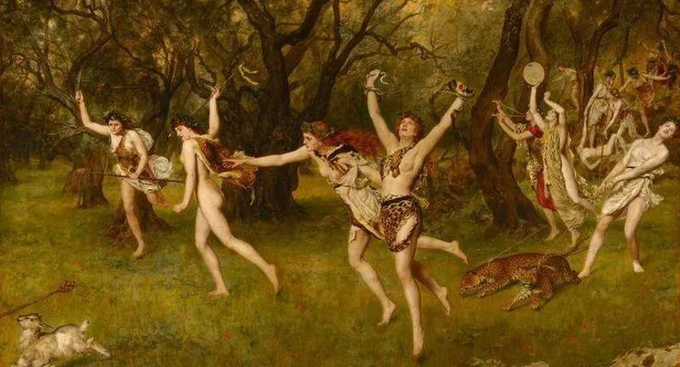
The foundations of Valentine’s Day likely stem from the Roman festival of Lupercalia, observed from February 13th to 15th. The origins of the festival are obscure, although the likely derivation of its name from lupus (Latin: “wolf”) has variously suggested connection with an ancient deity who protected herds from wolves and with the legendary she-wolf who nursed Romulus and Remus. As a fertility rite, the festival is also associated with the god Faunus. This pagan rite involved fertility rituals, including animal sacrifices and a lottery where young men drew women’s names for pairing, symbolising the onset of spring and renewal. In the late 5th century, Pope Gelasius I suppressed Lupercalia, possibly replacing it with a Christian feast to honour St. Valentine, aiming to sanctify the pagan customs.
The saint himself is shrouded in ambiguity. Historical records indicate multiple martyrs named Valentine in ancient Rome, with at least three linked to February 14th, though broader accounts suggest up to a dozen or more saints bearing the name overall. The primary legends focus on Valentine of Rome, a 3rd-century priest executed around 269–270 AD under Emperor Claudius II for aiding persecuted Christians and conducting clandestine marriages for soldiers barred from wedlock.

Another narrative involves Valentine of Terni, a bishop who miraculously healed his jailer’s blind daughter and penned a farewell note signed “from your Valentine” before his execution, these stories may conflate the same figure. Buried along the Via Flaminia north of Rome on February 14th, scant details survive, and any romantic associations are later fabrications lacking historical substantiation.
Scholars note that the day’s modern, polished, amorous narrative is largely mythical; Valentine was a martyr, not inherently a patron of lovers…
The Medieval Shift to Romance: Chaucer’s Influence
The pivot to romantic connotations occurred during the High Middle Ages, largely credited to English poet Geoffrey Chaucer. In the 1370s or 1380s, his poem “Parliament of Fowls” associated St. Valentine’s Day with avian courtship: “For this was on Saint Valentine’s Day, when every bird comes there to choose his mate.” This mirrored the rise of courtly love in Europe, where knights composed verses for unattainable noblewomen, often married, fostering themes of longing and insurmountable barriers that persist in contemporary romantic narratives.


By the 1400s, inspired by Chaucer, aristocrats exchanged “valentines”, poetic declarations of affection. This era solidified the day’s romantic ethos, diverging from its martyrological roots. The oldest known Valentine’s Day message in the English language was uncovered by the British Library.
The Valentine message, which dates back to 1477, is from Margery Brews to her fiancé, John Paston. In it, she tells John she has asked her mother to put pressure on her father to increase her dowry, while at the same time saying that, if he loves her, he should be prepared to marry her anyway. It is thought the couple did eventually tie the knot and had two children. The full text of the manuscript:
“Unto my right well-beloved Valentine John Paston, squire, be this bill delivered. Right reverent and worshipful and my right well-beloved valentine, I recommend me unto you full heartedly, desiring to hear of your welfare, which I beseech Almighty God long for to preserve unto his pleasure and your hearts desire. And if it pleases you to hear of my welfare, I am not in good health of body nor of heart, nor shall I be till I hear from you. For there knows no creature what pain that I endure, And even on the pain of death I would reveal no more. And my lady my mother hath laboured the matter to my father full diligently, but she can no more get than you already know of, for which God knoweth I am full sorry. But if you love me, as I trust verily that you do, you will not leave me therefore. For even if you had not half the livelihood that you have, for to do the greatest labour that any woman alive might, I would not forsake you. Love you truly
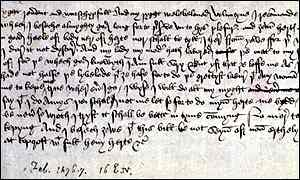
“And if you command me to keep me true wherever I go, indeed I will do all my might you to love and never anyone else. And if my friends say that I do amiss, they shall not stop me from doing so. My heart me bids evermore to love you truly over all earthly things. And if they be never so angry, I trust it shall be better in time coming. No more to you at this time, but the Holy Trinity have you in keeping. And I beseech you that this bill be not seen by any non earthly creature save only yourself. And this letter was written at Topcroft with full heavy heart. Be your own Margery Brews.”
Valentine’s Day in the United Kingdom: Traditions and Customs

In the UK, Valentine’s Day gained prominence in the 18th century, evolving into a blend of affectionate gestures with distinctly British elements. Common practices include:
- Anonymous Cards and Gifts: Brits exchange greeting cards (often unsigned for a touch of mystery), chocolates, flowers (especially red roses symbolising passion), and small tokens like teddy bears or heart-shaped cakes baked at home. This dates to Saxon times, when lovers gave items like gloves as symbols of commitment.
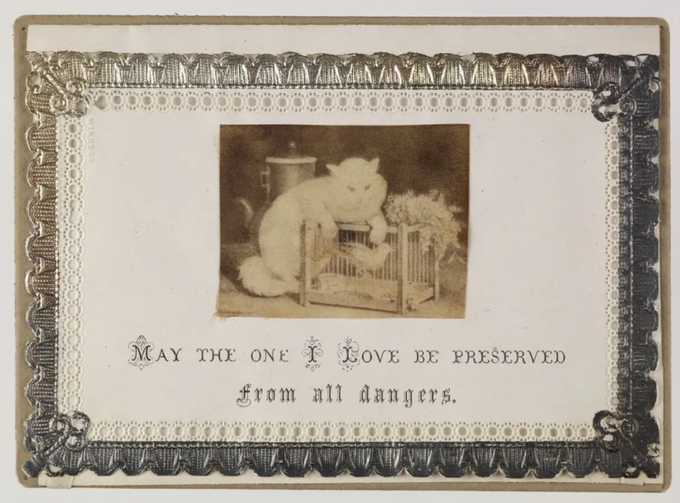
- Victorian Flourishes: Victorian innovations elevated the holiday, introducing lace-adorned handmade cards, puzzle purses with riddles, and even “vinegar valentines”, sarcastic or cheeky missives for rejected suitors/spurned admirers. Cadbury’s debuted heart-shaped chocolate boxes in 1861, a custom and tradition that endures to this day.
- Regional Customs: In Wales, carved wooden “love spoons” are gifted as tokens of affection. Superstitions are abound, like drawing names from a hat to pair “valentines” or baking rituals to predict future spouses.
- Gretna Green Elopements: A unique UK highlight is Gretna Green in Scotland, a haven for elopements since 1754, following England’s stricter marriage laws requiring parental consent for those under 21. Couples marry over the blacksmith’s anvil, embodying defiant romance, and it remains popular for Valentine’s weddings.
- Britons often mark the day with romantic dinners but extend affections to family, friends, and pets, contrasting its ancient, ritualistic beginnings.
Global Perspectives: How Valentine’s Day is Celebrated Worldwide
While the UK focuses on romantic pairs with a touch of whimsy, global traditions vary widely, often incorporating local customs or shifting dates.
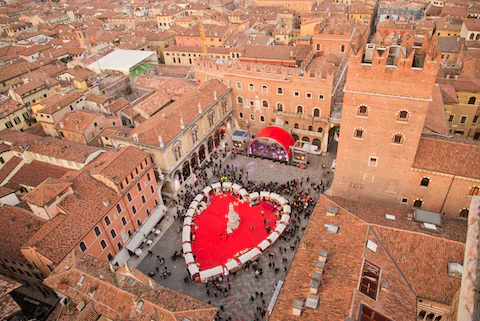
- In Europe, the similarities are in abundance: France emphasises elegant dinners and Paris getaways, akin to UK romantic breaks, while Italy’s “La Festa degli Innamorati” features intimate meals and gifts like perfumes or jewellery. Germany adds quirky elements, such as pig-themed gifts symbolising luck, alongside chocolates and flowers. Denmark and Norway send anonymous “gaekkebrev” poems with riddles, where guessing the sender earns an Easter egg. Estonia’s “Sobrapaev” celebrates all forms of love, romantic, familial, and friendly, on February 14th.
- In East Asia, Japan reverses gender roles: Women gift “giri-choco” (obligation chocolates) to colleagues and “honmei-choco” to partners on February 14th, with men reciprocating on White Day (March 14th). South Korea follows suit, extending to broader social circles.
- Brazil celebrates “Dia dos Namorados” on June 12th, with gifts, music festivals, and parties, avoiding February’s Carnival overlap.
- In the Americas, the US mirrors UK exchanges but amplifies commercialism, spending billions on cards and jewellery, often including platonic gestures to friends and children.
- South American countries like Argentina emphasise family love alongside romance.
- In India, celebrations blend Western influences with local resistance; some embrace cards and dinners, but conservative groups promote alternatives like “Cow Hug Day” to counter perceived Western decadence.
- Non-Christian regions show divergence: Islamic countries like Iran and Saudi Arabia often ban or discourage the holiday, viewing it as un-Islamic.
Historical Comparisons: Evolution Over Time
Historically, Valentine’s Day has shifted from a solemn feast to a commercialised event. In the UK, medieval courtly love gave way to 18th-century popularisation, influenced by printing presses enabling mass card production. Globalisation has spread the holiday far and wide; for instance, Japan’s traditions emerged in the 1930s via chocolate companies, evolving into a gendered exchange absent in UK customs. Brazil’s June date reflects Catholic adaptations to local calendars, unlike the UK’s fixed February observance. Over time, the UK’s focus on couples has broadened slightly to include friends, mirroring expansions in places like Estonia, while resisting the platonic emphasis in the US. Modern commercialisation; evident in UK spending of £1.3 billion annually, parallels global trends but retains unique elements like Gretna elopements, absent elsewhere.
Conclusion
From its murky Roman and Christian origins to Chaucer’s poetic infusion and diverse global adaptations, Valentine’s Day exemplifies cultural evolution. The UK’s traditions, rooted in anonymity, Victorian flair, and elopements offer a charming contrast to international variants, enriching our understanding of love’s universal yet varied expressions. Whether through a quiet card or a grand gesture, the day endures as a testament to affection’s timeless appeal.
HAPPY VALENTINE’S DAY! Whether you’re eloping to Gretna or sharing a quiet card, may your day be filled with love.
References and Additional Sources:
- Britannica (n.d.) Valentine’s Day. Available at: https://www.britannica.com/topic/Valentines-Day (Accessed: 13 February 2026).
- CIEE (2026) Valentine’s Day Traditions Around the World. Available at: https://www.ciee.org/go-abroad/college-study-abroad/blog/valentines-day-traditions-around-world (Accessed: 13 February 2026).
- Collin Street Bakery (n.d.) International Valentine’s Day Traditions. Available at: https://collinstreet.com/blogs/holidays/international-valentines-day-traditions (Accessed: 13 February 2026).
- Country Living Magazine (2026) A Brief History of Valentine’s Day—and How It Became Romantic. Available at: https://www.countryliving.com/life/a46353/history-of-valentines-day (Accessed: 13 February 2026).
- Create Gift Love (2023) How Do Different Cultures Celebrate Valentine’s Day? Available at: https://www.creategiftlove.co.uk/blogs/valentines-day/how-do-different-cultures-celebrate-valentines-day (Accessed: 13 February 2026).
- Direct Ferries (2026) Valentine’s Day Around the World: How Love Is Celebrated Globally. Available at: https://www.directferries.com/blog/valentines-day-around-the-world (Accessed: 13 February 2026).
- EF United States (n.d.) 6 Valentine’s traditions from around the world that we love. Available at: https://www.ef.edu/blog/language/6-valentines-traditions-around-world-love (Accessed: 13 February 2026).
- English Heritage (n.d.) The history of Valentine’s Day. Available at: https://www.english-heritage.org.uk/visit/inspire-me/the-history-of-valentines-day (Accessed: 13 February 2026).
- Foreign Tongues (2020) Valentine’s Day history and traditions around the world. Available at: https://www.foreigntongues.co.uk/valentines-day-history-and-traditions-around-the-world (Accessed: 13 February 2026).
- Freetest.me (n.d.) 5 Valentine’s Traditions from Around the World. Available at: https://www.freetest.me/blog/valentines-around-the-world (Accessed: 13 February 2026).
- Historic UK (2023) The History of St Valentines Day. Available at: https://www.historic-uk.com/CultureUK/St-Valentines-Day (Accessed: 13 February 2026).
- History.com (2026) Valentine’s Day 2026: Origins & Holiday Traditions. Available at: https://www.history.com/articles/history-of-valentines-day (Accessed: 13 February 2026).
- Holafly (2026) The most unique (& weird) Valentine’s Day traditions around the world! Available at: https://esim.holafly.com/travel-tips/unique-valentines-day-traditions (Accessed: 13 February 2026).
- Jacquie Lawson (n.d.) Celebrating Valentine’s Day in the UK: British Valentine’s Day Traditions. Available at: https://www.jacquielawson.com/blog/celebrating-valentines-day-in-the-uk (Accessed: 13 February 2026).
- Jetpac eSIM (2026) Strange & Sweet Valentine’s Day Traditions Around the World. Available at: https://www.jetpacglobal.com/blog/valentines-day-traditions (Accessed: 13 February 2026).
- Learn English with Katie (2025) Valentine’s Day in the UK and other countries. Available at: https://www.learnenglishwithkatie.co.uk/blog/valentines-day (Accessed: 13 February 2026).
- Online Teachers UK (n.d.) Valentine’s Day In The UK: Could English Become Your Language Of love? Available at: https://onlineteachersuk.com/valentines-day-english (Accessed: 13 February 2026).
- Petal & Poem (2025) Valentine’s Day equivalents around the world. Available at: https://www.petalandpoem.com/floral-thoughts/valentines-day-equivalents-around-the-world (Accessed: 13 February 2026).
- Plumorchard.com (2025) The History & Evolution Of Valentine’s Day: How It Became What It Is Today. Available at: https://plumorchard.com/the-history-evolution-of-valentines-day-how-it-became-what-it-is-today (Accessed: 13 February 2026).
- Tatler Asia (n.d.) From Qixi to Pepero Day: 9 Valentine’s Day equivalents around the world. Available at: https://www.tatlerasia.com/lifestyle/travel/valentines-day-equivalents-pepero-day-white-day (Accessed: 13 February 2026).
- The British Pilgrimage Trust (2025) The Curious History of Valentine’s Day: From Ancient Rituals to Victorian Elegance. Available at: https://www.britishpilgrimage.org/stories/the-curious-history-of-valentines-day-from-ancient-rituals-to-victorian-elegance (Accessed: 13 February 2026).
- TODAY (n.d.) 15 Valentine’s Day traditions from around the world to inspire your celebration. Available at: https://www.today.com/life/holidays/valentines-day-traditions-around-the-world-rcna64522 (Accessed: 13 February 2026).
- United Language Group (2025) What Valentine’s Day Traditions Mean Around the World. Available at: https://www.unitedlanguagegroup.com/learn/what-valentines-day-traditions-mean-around-the-world (Accessed: 13 February 2026).
- USA Today (2026) See how Valentine’s Day is celebrated across the world. Available at: https://www.usatoday.com/story/graphics/2026/02/12/valentines-day-celebrations-around-world/88589614007 (Accessed: 13 February 2026).
- Wikipedia (n.d.) Valentine’s Day. Available at: https://en.wikipedia.org/wiki/Valentine’s_Day (Accessed: 13 February 2026).
- WorldStrides (2024) 6 Valentines Day Traditions Around the World. Available at: https://worldstrides.com/en-us/teachers/how-it-works/blog/6-valentines-day-traditions-around-the-world (Accessed: 13 February 2026).