


As a woman who has always held the utmost respect for our armed forces; past, present, and future, I believe it’s our collective duty as UK citizens to honour those who serve and sacrifice for our freedom. Growing up, with two grandads who served, alongside my grandma who also served during WWII, seeing their quiet strength, and that of veterans in my community, it instilled in me a deep appreciation for the unique challenges they face.
The Armed Forces Bill 2024-26 represents a crucial step towards ensuring that respect translates into tangible support. In this article, I’ll share my perspective on why this bill is so important, where it stands, its chances of success, and how we can all get involved to push it forward.
Whether it’s the soldiers who defended our shores during the two world wars, those who served in Northern Ireland, Iraq, Afghanistan and all around the globe, the personnel currently deployed overseas, or the veterans reintegrating into civilian life, their commitment deserves unwavering recognition. That’s why bills like this one resonate with me; they ensure that the Armed Forces Covenant isn’t just a promise but a legal obligation. Everyone in the UK should feel compelled to support our forces, not out of obligation, but out of shared national pride. This bill could make that a reality by embedding fairness and support into government policy.
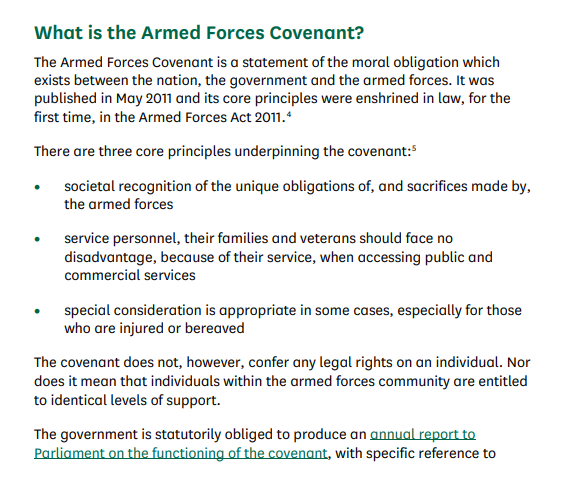
https://researchbriefings.files.parliament.uk/documents/CBP-10471/CBP-10471.pdf
Understanding the Armed Forces Bill 2024-26
The Armed Forces Bill 2024-26, introduced on 15th January 2026, primarily renews the Armed Forces Act 2006, which provides the legal foundation for maintaining our standing armed forces. Armed Forces Bills are constitutionally significant, dating back to the 1688 Bill of Rights, and form the legal basis for Parliamentary approval to raise and maintain the Armed Forces (and by extension the Navy and Air Force) during peacetime. This renewal is constitutionally required every five years to authorise the existence of the military.
Beyond that, the bill introduces key reforms to better support serving personnel, veterans, and their families. A standout feature is the strengthening of the Armed Forces Covenant. For the first time, central UK Government departments and devolved administrations would be legally required to have “due regard” for the Covenant in policy-making. Currently, this duty is limited to local levels and specific areas. The expansion would cover vital sectors like housing, education, healthcare, social care, childcare, employment, personal taxation, welfare benefits, criminal justice, immigration, citizenship, pensions, service-related compensation, and transport.
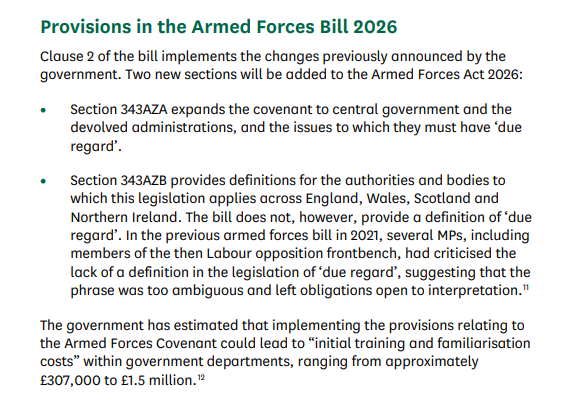
This aligns with calls from veterans’ groups like Help for Heroes and fulfils a 2024 Labour manifesto pledge. Other provisions include establishing a new Defence Housing Service to improve accommodations for forces families, granting powers to counter drone threats near military bases, enhancing protections for victims of serious crimes in the service justice system, and reforms to reserve forces, such as raising the recall age to 65 and easing transfers between regular and reserve roles.
Why This Bill Matters So Much
From my viewpoint, this bill is about more than policy, it’s about dignity and fairness. Our armed forces community often faces disadvantages that civilians don’t, like frequent relocations affecting children’s education or spouses’ careers, or long waits for healthcare due to service-related injuries. Extending the Covenant duty nationwide would help prevent these issues, creating consistent support across the UK.
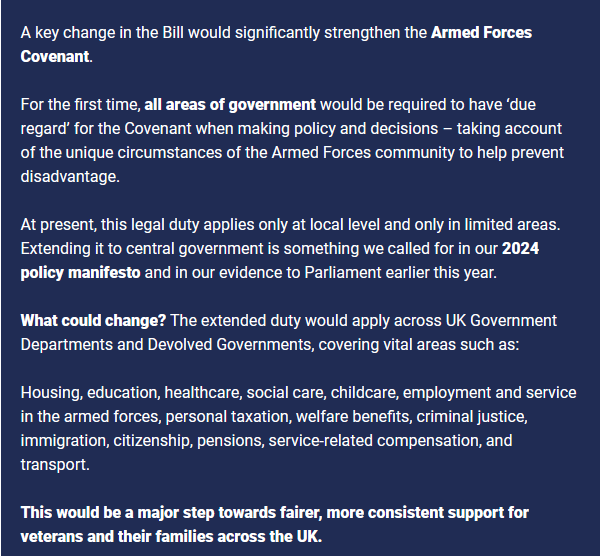
https://www.helpforheroes.org.uk
As someone who values family stability, I see this as essential for forces families, many of whom include women juggling multiple roles. Moreover, with record government spending on veterans’ support, trebling to nearly £37 million in 2025/26, this bill builds on momentum to honour our heroes.
It’s a reminder that respecting our forces means investing in their futures. If we as a society fail to support them, we undermine the very freedoms they protect.
Current Status of the Bill
As of 7th February 2026, the bill has passed its Second Reading in the House of Commons on 26th January 2026, with cross-party support. It is now in the committee stage, where a special Armed Forces Bill Select Committee will scrutinise it in detail, potentially proposing amendments. After that, it will return to the Commons for further debate, then proceed to the House of Lords. The bill must receive Royal Assent before the end of 2026 to renew the 2006 Act.
Chances of Success
Given its status as a government-sponsored bill with manifesto backing, the prospects are strong. The constitutional necessity to renew the Armed Forces Act adds urgency, making outright failure unlikely. Debates during Second Reading showed broad consensus, though minor amendments could emerge in committee. Veterans’ organisations like Cobseo, Help for Heroes and the Royal British Legion have endorsed it, further boosting its momentum. I believe it will pass, potentially with enhancements, by year’s end.

How We Can Support the Bill
As individuals, we have power to influence.
- Contact your MP to voice support, especially during committee stage.
- Join campaigns from groups like Help for Heroes or the Royal British Legion.
- Spread awareness on social media using reliable sources to build public pressure.
- Every voice counts in ensuring our forces get the respect they deserve.
Template Letter to Your MP
Here’s a template you can personalise and send to your MP (find them at https://www.parliament.uk/mps-lords-and-offices/mps):
[Your Name]
[Your Address]
[Email]
[Date]
Dear [MP’s Name],
I am writing as a constituent to express my strong support for the Armed Forces Bill 2024-26, particularly the provisions strengthening the Armed Forces Covenant. As someone who deeply respects our armed forces; past, present, and future, I believe this bill is vital to ensure fair treatment for serving personnel, veterans, and their families.
I am writing specifically to express my strong support for the Armed Forces Bill 2024-26, and in particular for the important provisions that will significantly strengthen the Armed Forces Covenant. For too long, the unique challenges faced by serving personnel, veterans, and their families, such as frequent moves disrupting children’s education, difficulties accessing timely healthcare, barriers to employment for spouses, and housing issues, have not received the consistent, nationwide attention they deserve. The current legal duty to have “due regard” for the Covenant applies only at local level and in limited areas. Extending this duty to all central Government departments and the devolved administrations is a long-overdue and vital step forward.
I am very pleased to see that the Bill would require all areas of government to properly consider the needs of the Armed Forces community when making policy and taking decisions in critical areas including:
- housing
- education and childcare
- healthcare
- social care
- employment
- personal taxation
- welfare benefits
- pensions
- service-related compensation
- transport
- criminal justice
- immigration and citizenship
This change would help prevent disadvantage, promote fairness, and deliver more consistent support right across the United Kingdom. It would show that we as a nation truly value the service and sacrifice of our armed forces community, not just in words, but through meaningful, enforceable action.
[ADD A PERSONAL NOTE/REASON]
I therefore urge you to give your full support to the Armed Forces Bill 2024-26 during its remaining stages in Parliament, and to back any reasonable amendments that would further strengthen or clarify the Covenant provisions.
I would be very grateful if you could let me know:
- whether you support the extension of the “due regard” duty to central government and devolved administrations,
- how you intend to vote on the Bill,
- and any steps you are taking to ensure these important Covenant improvements are fully delivered.
Thank you for taking the time to read my letter and for the work you do on behalf of our constituents.
I look forward to hearing from you.
Yours sincerely,
[Your Name]
Sending this letter is important because MPs represent us, and personal stories amplify the bill’s human impact. It shows policymakers that public respect for our forces translates into demand for action. In conclusion, the Armed Forces Bill is a beacon of hope for better support. Let’s rally behind it to show our gratitude.
References
- Cobseo (2026) Armed Forces Bill 2026. Available at: https://www.cobseo.org.uk/armed-forces-bill-2026 (Accessed: 7 February 2026).
- GOV.UK (2026a) Government spends record levels to support our veterans. Available at: https://www.gov.uk/government/news/government-spends-record-levels-to-support-our-veterans (Accessed: 7 February 2026).
- GOV.UK (2026b) Victims of serious and sexual crime to receive better protection and support in Armed Forces justice reforms. Available at: https://www.gov.uk/government/news/victims-of-serious-and-sexual-crime-to-receive-better-protection-and-support-in-armed-forces-justice-reforms (Accessed: 7 February 2026).
- House of Commons Library (2026) Armed Forces Bill 2024-26. Available at: https://commonslibrary.parliament.uk/research-briefings/cbp-10471 (Accessed: 7 February 2026).
- Ministry of Defence (2026) Here’s what you need to know about the Armed Forces Bill and what it means for Armed Forces’ family housing. Available at: https://www.facebook.com/theministryofdefence/videos/heres-what-you-need-to-know-about-the-armed-forces-bill-and-what-it-means-for-ar/1559365181771818 (Accessed: 7 February 2026).
- Parallel Parliament (2026a) Armed Forces Bill 2024-26. Available at: https://www.parallelparliament.co.uk/bills/2024-26/armedforces (Accessed: 7 February 2026).
- Parallel Parliament (2026b) Mark Francois – All Armed Forces Bill 2024-26 Contributions. Available at: https://www.parallelparliament.co.uk/mp/mark-francois/bill/2024-26/armedforces (Accessed: 7 February 2026).
- The Register (2026) British military to get legal OK to swat drones near bases. Available at: https://www.theregister.com/2026/02/03/armed_forces_bill_drones (Accessed: 7 February 2026).
- UK Parliament (2026) Armed Forces Bill 2024-26 – UK Parliament. Available at: https://researchbriefings.files.parliament.uk/documents/CBP-10471/CBP-10471.pdf (Accessed: 7 February 2026).