

The 2nd February, 2026, marks the 174th anniversary of a pivotal moment in British history: the opening of the first public flushing toilet for men at 95 Fleet Street, London.
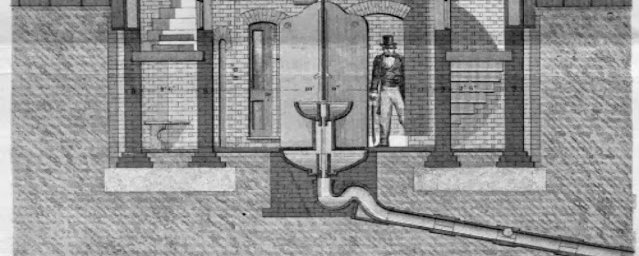
Designed by sanitary engineer George Jennings, this facility, dubbed a “Public Waiting Room”, built on the success of his innovative “Monkey Closets” installed at the 1851 Great Exhibition in Hyde Park’s Crystal Palace. At the Exhibition, over 827,000 visitors paid one penny each to use these conveniences, which included a clean seat, towel, comb, and shoe shine, generating significant excitement as the first public toilets of their kind. (Hence the term “to spend a penny”).
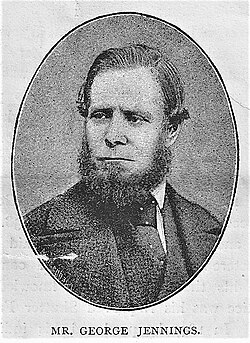
George Jennings was a pioneering sanitary engineer who dedicated himself to creating what he proudly described as “as perfect a sanitary closet as can be made.” Beyond perfecting individual toilet designs, he became a leading figure in advancing public sanitation, particularly through his innovative work on underground public conveniences. These facilities featured striking entrances adorned with elaborate metal railings and graceful arches, illuminated by lamps that gave them an almost grand, welcoming presence on busy Victorian streets. Inside, the spaces were constructed with durable slate surfaces, later giving way to elegant ceramic tiles that enhanced both hygiene and aesthetics.
A particularly fine surviving example of this style of public convenience, built shortly after Jennings’s death in a way that would surely have met with his approval, can be found at Wesley’s Chapel on City Road in London. Installed in 1891 by the renowned plumber Thomas Crapper, the Gentleman’s Convenience there preserves the meticulous craftsmanship and attention to detail that characterised Jennings’s vision. Jennings’s most celebrated achievement, however, his installation of the famous “Monkey Closets” in the Retiring Rooms of the Crystal Palace, have sadly not survived to the present day.
Opening up “The Ladies”
Just nine days later, on the 11th February, 1852, the first public flushing toilet for women opened at 51 Bedford Street, Strand, about a mile away. This marked a crucial, if tentative, step toward addressing the needs of women in public spaces. While men’s facilities had existed in rudimentary forms for centuries, women’s access was severely limited, often confining them to private homes or select venues like department stores.
The Fleet Street site, located next to the Society of Arts, charged an initial fee of two pence, which contributed to its low uptake, reports indicate only 58 men used it in the first month. Due to this unpopularity, the facility closed after just six months, but it laid the groundwork for widespread public sanitation infrastructure.
The introduction of these separate conveniences was not merely a sanitary advancement; it represented a profound shift in social dynamics, particularly for women.
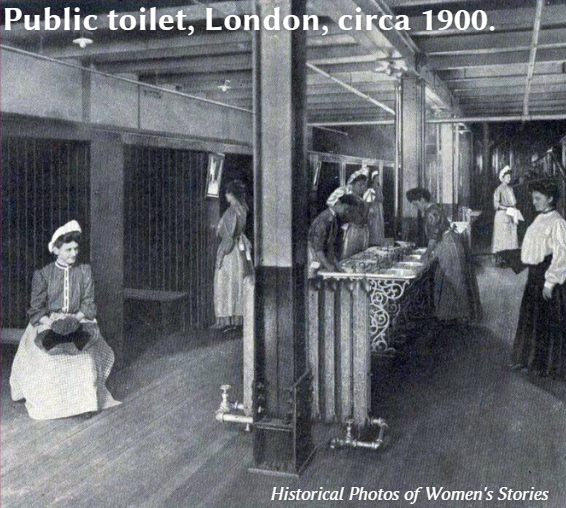
Breaking the ‘Urinary Leash’: A Revolution in Public Life
In Victorian Britain, the absence of public toilets for women created what historians term the “urinary leash”, a metaphorical constraint that tethered women to their homes or familiar locations, where facilities were available. Women could only venture as far as their bladders allowed, planning routes around family, friends, or rare private options to avoid embarrassment or discomfort. This restriction curtailed their participation in public life, limiting opportunities for work, shopping, socialising, and travel. The “urinary leash” was no accident; it reflected societal norms that viewed women’s presence in public as improper, with opposition to female facilities rooted in concerns over modesty and morality.
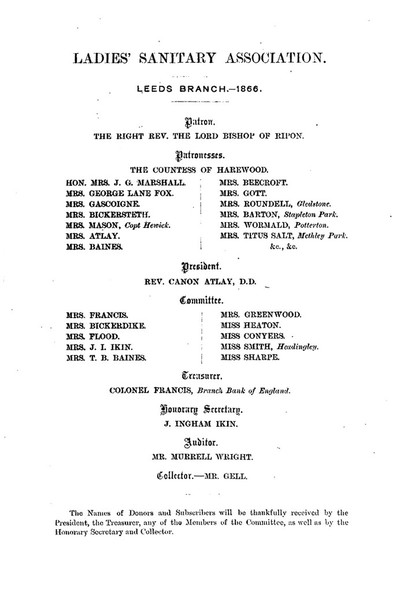
The 1852 openings, spurred by Jennings’ Exhibition success and campaigns from groups like the Ladies Sanitary Association, began to sever this leash. By providing dedicated spaces, these facilities enabled women to engage more freely in life, fostering greater independence and equality. Over time, this innovation revolutionised public sanitation, contributing to broader health improvements under acts like the Public Health Acts of 1848 and 1875.
The phrase “spend a penny,” originating from the Exhibition’s fee, became synonymous with using public conveniences, underscoring their cultural impact.
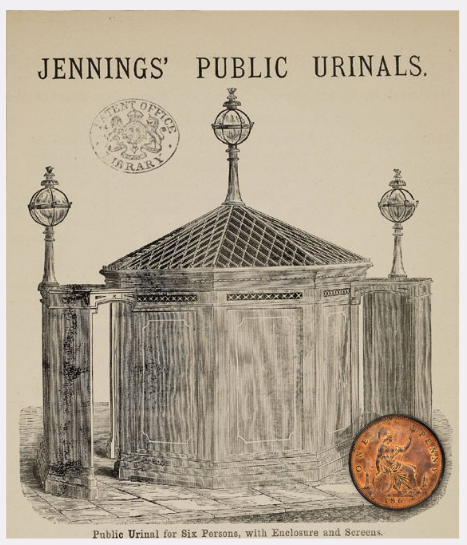
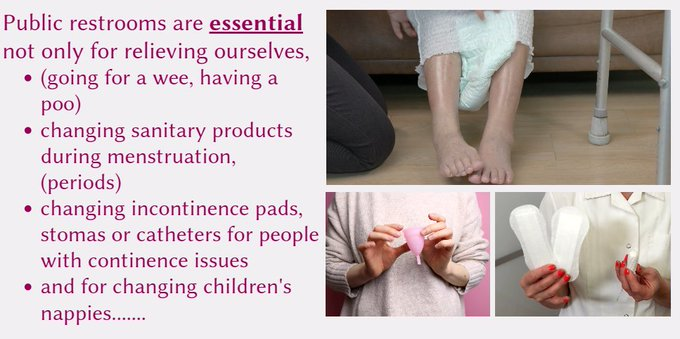
Separate sex toilets were essential to this revolution. Men’s facilities often included urinals for quick use, while women’s required cubicles for privacy during menstruation, changing sanitary products, or other needs that left users vulnerable. Mixed or inadequate provisions would have perpetuated exclusion, as women faced heightened risks of harassment, discomfort, or health issues like urinary tract infections from holding in urine. This separation ensured dignity, safety, and accessibility, allowing both sexes; but especially women, to break free from domestic confines and contribute to society.

The significance of George Jennings’ pioneering work
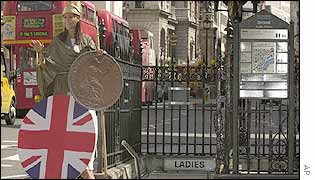
His work was highlighted again in 2002, when the 150th anniversary of Britain’s first public flushing toilet was marked amid growing concerns over the decline of public conveniences. On 14th August 2002, a ceremonial giant penny was laid at the historic Fleet Street site, opposite the Royal Courts of Justice, where the facility had opened exactly 150 years earlier to help combat disease spread through street fouling.
Although the original underground toilet is now buried and long gone, the commemoration drew attention to a troubling trend: public toilets across the UK, especially in London, were closing at an alarming rate. According to figures from the Audit Commission released by the British Toilet Association, 47% of public conveniences in metropolitan boroughs in England had been shut down over the previous eight years. Experts like built-environment specialist Dr Clara Greed pointed out that provision was already limited and declining further; particularly for women, who historically had about half as much access as men. In response to persistent street urination in the West End, Westminster City Council had begun introducing mobile and “telescopic” open-air urinals in areas like Soho and Covent Garden, while only two of the borough’s 32 public loos remained open 24 hours a day. The anniversary thus served as both a celebration of a vital sanitary milestone and a stark reminder of the ongoing challenges in maintaining accessible, dignified public facilities in the modern era.
Why Separate Sex Toilets Remain Vital Today
The principles established in 1852 continue to resonate in modern UK law and policy, where separate facilities based on biological sex are mandated to protect privacy, dignity, and safety. Under the Workplace (Health, Safety and Welfare) Regulations 1992, workplaces, including hospitals and public venues, must provide separate toilets, washing, and changing facilities for men and women, defined biologically, unless single-occupancy lockable rooms are used.
This aligns with the Equality Act 2010, which interprets “sex” as biological, not gender identity, as clarified by the UK Supreme Court’s April 2025 ruling in For Women Scotland Ltd v Scottish Ministers. The ruling emphasises that “woman” refers to biological females, enabling exclusions from single-sex spaces to prevent discrimination and maintain coherence in protections against historical inequalities.
Recent cases illustrate these imperatives. In the 2026 tribunal Bethany Hutchison & Others v County Durham and Darlington NHS Foundation Trust, nurses successfully challenged a policy allowing a biological male identifying as female into women’s changing rooms, citing violations of privacy and creating a hostile environment. Similarly, backlash against Wetherspoons’ transgender toilet policy highlights non-compliance risks post-Supreme Court ruling, with calls for adherence to biological sex-based separations in public services.
Schools face similar scrutiny: the School Premises Regulations require separate toilets for pupils over eight based on biological sex, with critiques of mixed facilities underscoring safeguarding duties under the Education Act 2002. These laws echo the historical fight against the urinary leash, prioritising vulnerability in shared spaces. Statistics show 98% of sexual offenses are committed by males, heightening risks in mixed facilities.
Conditions like shy bladder syndrome, incontinence, or pregnancy further necessitate safe, separate environments to avoid isolation or health complications. Dismissing these concerns ignores evidence from cases, where access breaches led to distress. Maintaining biological sex-based separations ensures equality, prevents harassment, and upholds the legacy of 1852’s innovations.
In commemorating this anniversary, we recognise not just a sanitary milestone but a cornerstone of social progress, one that demands vigilant protection of separate sex facilities to safeguard all.
References
- BBC News (2002) Closure worries on toilets’ anniversary. Available at: http://news.bbc.co.uk/1/hi/england/2191380.stm (Accessed: 2 February 2026).
- Brokenhouse Company (2022) The first flushing toilets in London. Available at: https://www.brokenhousecompany.it/blog/ilsanitario/2022/02/07/the-first-flushing-toilets-in-london (Accessed: 2 February 2026).
- Cavanagh, S. and Ware, V. (1990) At women’s convenience: A handbook on the design of women’s public toilets. London: Women’s Design Service.
- Cooper, A., Law, R., Malthus, J. and Wood, P. (2000) ‘Rooms of their own: Public toilets and gendered citizens in a New Zealand city, 1860-1940’, Gender, Place and Culture, 7(4), pp. 417-433.
- Crook, T. (2006) ‘Norms, forms and beds: Spatializing sleep in Victorian Britain’, Body & Society, 12(4), pp. 15-35.
- Derelict London (n.d.) Toilets. Available at: https://www.derelictlondon.com/toilets.html (Accessed: 2 February 2026).
- Greed, C. (2007) ‘A code of practice for public toilets in Britain’, World Health Design, 1(1), pp. 76-85.
- Greed, C. (2019) ‘Join the queue: Including women’s toilet needs in public space’, Sociological Review, 67(4), pp. 908-926.
- Greed, C.H. (1996) ‘Planning for women and other disenabled groups, with reference to the provision of public toilets in Britain’, Environment and Planning A, 28(3), pp. 573-588.
- Historic England (n.d.) Spending a Penny: A Photographic Exploration of England’s Public Toilets. Available at: https://historicengland.org.uk/images-books/archive/collections/photographs/spending-a-penny (Accessed: 2 February 2026).
- Historic UK (2018) The History of Women’s Public Toilets in Britain. Available at: https://www.historic-uk.com/CultureUK/History-of-Womens-Public-Toilets-in-Britain (Accessed: 2 February 2026).
- Holford, J. (2025) The Ladies. Available at: https://www.josieholford.com/the-ladies (Accessed: 2 February 2026)
- Jeffreys, S. (2014) ‘The politics of the toilet: A feminist response to the campaign to ‘degender’ a women’s space’, Women’s Studies International Forum, 45, pp. 42-51.
- Jenk Teach & Culture of Care (2026a) UK Law Requires Separate Changing and Toilet Facilities for Men and Women in Workplaces. Available at: https://jenkteach.co.uk/uk-law-requires-separate-changing-and-toilet-facilities-for-men-and-women-in-workplaces/ (Accessed: 2 February 2026).
- Jenk Teach & Culture of Care (2026b) Wetherspoons Faces Backlash Over Transgender Toilet Policy After Supreme Court Ruling. Available at: https://jenkteach.co.uk/wetherspoons-faces-backlash-over-transgender-toilet-policy-after-supreme-court-ruling/ (Accessed: 2 February 2026).
- Jenk Teach & Culture of Care (2026c) UK Supreme Court Rules ‘Woman’ Refers to Biological Females. Available at: https://jenkteach.co.uk/uk-supreme-court-rules-woman-refers-to-biological-females/ (Accessed: 2 February 2026).
- Jenk Teach & Culture of Care (2026d) Why This Article Misses the Mark on School Toilet Laws: A Legal Take Down, With a Side of Sass!. Available at: https://jenkteach.co.uk/why-this-article-misses-the-mark-on-school-toilet-laws-a-legal-take-down-with-a-side-of-sass/ (Accessed: 2 February 2026).
- Jenk Teach & Culture of Care (2026e) Understanding the Supreme Court’s Ruling on Sex and Gender: A Simplified Analysis Supporting Naomi Cunningham’s Perspective. Available at: https://jenkteach.co.uk/understanding-the-supreme-courts-ruling-on-sex-and-gender-a-simplified-analysis-supporting-naomi-cunninghams-perspective/ (Accessed: 2 February 2026).
- Law, R., Cooper, A. and Malthus, J. (1999) ‘Public toilets and the management of faecal aversion’, New Zealand Geographer, 55(1), pp. 48-57.
- Melbourne Blogger (2021) First public toilets for UK men! For women?. Available at: http://melbourneblogger.blogspot.com/2021/04/first-public-toilets-for-men-in-britain.html (Accessed: 2 February 2026).
- Mukund Sathe (2016) This Day in History (2-Feb-1852) – 1st British public men’s toilet opens. Available at: https://mukundsathe.com/2016/02/02/this-day-in-history-2-feb-1852-1st-british-public-mens-toilet-opens (Accessed: 2 February 2026).
- Office for National Statistics (2023) Crime in England and Wales: year ending March 2023. London: ONS.
- Penner, B. (2001) ‘A world of unmentionable suffering: Women’s public conveniences in Victorian London’, Journal of Design History, 14(1), pp. 35-51.
- Ramster, G., Greed, C. and Bichard, J.A. (2018) ‘How inclusion can exclude: The case of public toilet provision for women’, Built Environment, 44(1), pp. 52-76.
- Sathe, M. (2016) This Day in History (2-Feb-1852) – 1st British public men’s toilet opens. Available at: https://mukundsathe.com/2016/02/02/this-day-in-history-2-feb-1852-1st-british-public-mens-toilet-opens (Accessed: 2 February 2026).
- Spitalfields Life (2019) At God’s Convenience. Available at: https://spitalfieldslife.com/2019/01/31/at-gods-convenience-x (Accessed: 2 February 2026).
- The Northern Echo (2020) The historic toilets that helped women slip the “urinary leash”. Available at: https://www.thenorthernecho.co.uk/news/18716020.historic-toilets-helped-women-slip-urinary-leash (Accessed: 2 February 2026).
- The Retrospectors (n.d.) The Urinary Leash. Available at: https://theretrospectors.com/the-urinary-leash (Accessed: 2 February 2026).
- The Victorianist (2011) “Spending a Penny”: Or The First Public Flushing Toilets – Open on This Day in 1852. Available at: http://thevictorianist.blogspot.com/2011/02/spending-penny-or-first-public-flushing.html (Accessed: 2 February 2026).
- University of Leeds (n.d.) Women’s rights and the “loo leash”: the fight for public toilets in the UK. Available at: https://wash.leeds.ac.uk/womens-rights-and-the-loo-leash-the-fight-for-public-toilets-in-the-uk (Accessed: 2 February 2026).
- Vintage Everyday (2022) February 2, 1852: The First Public Flushing Toilets Open in London. Available at: https://www.vintag.es/2022/02/public-flushing-toilets.html (Accessed: 2 February 2026).
- Wikipedia (2026) George Jennings. Available at: https://en.wikipedia.org/wiki/George_Jennings (Accessed: 2 February 2026).
- YouTube (n.d.) Why Single Sex Toilets Are Important. Available at: https://youtu.be/1HaTVjsM4CE (Accessed: 2 February 2026).