
The Anachronistic Error: Why Calling the Virgin Mary ‘Palestinian’ Is Historically Inaccurate and Why Universities Must Prioritise Facts
Anachronism: (something belonging or appropriate to a period other than that in which it exists or is portrayed).
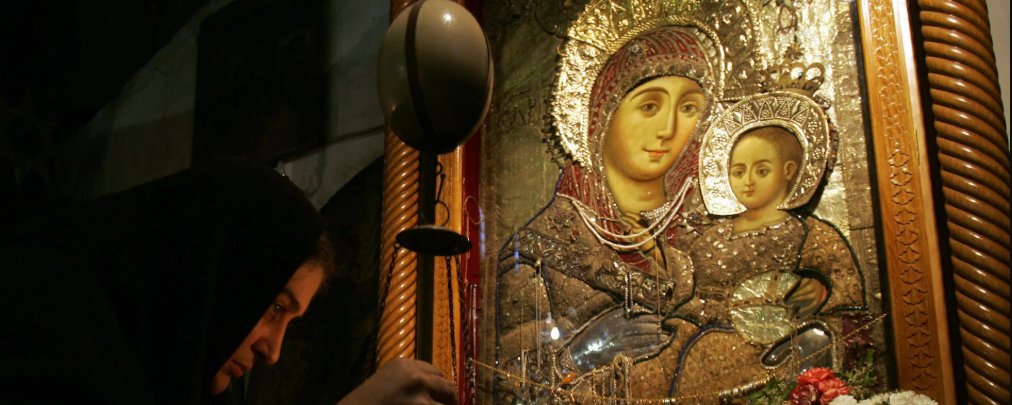
In a recent academic misstep that has sparked widespread debate, the Open University (OU) in the UK faced criticism for describing the Virgin Mary as hailing from “ancient Palestine” in its entry-level humanities module, Discovering the Arts and Humanities. The course materials, which explore religious myths and legends, referred to Mary’s birthplace in Galilee, noted Aramaic as a language “widely spoken in ancient Palestine,” and even included a map labelled “Map of ancient Palestine”.
Following a formal complaint from UK Lawyers for Israel (UKLFI), the university agreed to excise the term from future materials and add explanatory notes to existing ones, acknowledging its “problematic” nature in today’s context. While the OU insisted the phrasing was drawn from pre-2018 scholarship and carried no political intent, the incident underscores a deeper issue: the inherent wrongness of applying modern or anachronistic labels to ancient figures like Mary, regardless of contemporary geopolitical tensions.
At its core, labelling Mary as “Palestinian” or from “ancient Palestine” is a historical inaccuracy that distorts the timeline of the region’s nomenclature. Mary, traditionally believed to have been born in the late first century BC in Nazareth, Galilee, lived in a predominantly Jewish area under the rule of the Herodian kingdom and later Roman oversight. This region was known as Judea, Samaria, and Galilee, terms reflecting its Jewish cultural and political identity at the time.
The name “Palestine” (derived from “Philistia,” referring to the ancient Philistines along the coast) did not become an official Roman provincial designation until around 135 AD, when Emperor Hadrian renamed the area “Syria Palaestina” following the suppression of the Bar Kokhba revolt, a Jewish uprising against Roman rule. This renaming was a deliberate act to erase Jewish ties to the land, punishing the rebels by invoking the name of their ancient enemies, the Philistines. To retroactively apply “Palestine” to Mary’s era is akin to calling Julius Caesar a “Frenchman” because Gaul later became part of France, it’s not just imprecise; it’s fundamentally misleading.
Historical records confirm this timeline. The Greek historian Herodotus used “Palaistinê” in the 5th century BC, but this referred narrowly to the coastal strip inhabited by Philistines, not the inland Jewish heartlands like Galilee or Judea. By Mary’s lifetime, the area was firmly under Jewish cultural dominance, with no widespread use of “Palestine” as a blanket term. Roman sources, including those from the time of Jesus (Mary’s son), consistently refer to the province as “Judea”. As one critic noted in online discussions, “The word Palaestina was later specifically chosen by the Romans as a big fuck you to the Jews.” This anachronism isn’t merely academic nit-picking; it risks erasing the Jewish identity of figures central to both Judaism and Christianity, portraying them through a lens that aligns with later imperial rebranding.
The wrongness here transcends politics, though the term’s modern connotations; tied to the Israeli-Palestinian conflict, amplify the error. Even without today’s sensitivities, which have heightened since the October 7th, 2023, attacks and the ensuing Gaza war, the label is factually flawed.
Mary’s story, as depicted in the New Testament, is rooted in Jewish tradition: she was a devout Jew from a Jewish village, betrothed to Joseph, a descendant of King David. Calling her “Palestinian” imposes a national or ethnic identity that didn’t exist in her time, much like recent controversies over Netflix’s film Mary, where debates raged over casting and whether she should be portrayed as “Arab Palestinian” despite her Jewish origins. As one critic pointed out, “Mary was a Jew, from Judea, whose son was born 135 years before the region was renamed Syria-Palestina by the conquering Romans.” This is about not trying to overwrite ancient realities.
Universities, as bastions of knowledge, bear a special responsibility to avoid such pitfalls. The OU, with its 170,000 students worldwide, should have known better than to perpetuate this inaccuracy in a module meant to introduce arts and humanities through factual lenses. Academic materials from 2018 might have drawn from outdated or loosely interpreted scholarship, but rigorous peer review should catch anachronisms. As UKLFI argued, such phrasing could mislead students and create a hostile environment for Jewish learners, potentially violating equality laws. A Jewish OU student, Tommy Merchan, expressed shock at the “inaccuracies in a history-focused course reliant on factual precision,” fearing it could fuel propaganda undermining Jewish historical claims.
Broader examples abound: museums like the World Museum Liverpool have faced similar calls to correct labels referring to “Palestinian wine” or artifacts from “ancient Palestine,” opting instead for neutral terms like “Canaan” or “the Levant”. Institutions must prioritise evidence-based teaching over convenience or inadvertent bias. In defending the change, OU’s Adrienne Scullion emphasised that the term was not intended politically but accepted its evolved implications.
This is a step forward, but it highlights a systemic issue in academia: the need for vigilance against historical revisionism, even unintentional. As debates on X illustrate, from Bear Grylls’ similar gaffe to calls for accurate representation, public scrutiny demands better. Ultimately, honouring Mary’s legacy means grounding it in truth, not in labels that serve modern narratives at the expense of ancient facts. Universities must lead by example, ensuring education illuminates history rather than obscuring it.
Reference List
- France, R.T. (2007) The Gospel of Matthew. New International Commentary on the New Testament. Grand Rapids, MI: Eerdmans.
- Herodotus (c. 440 BCE) The Histories. Translated by A.D. Godley (1920). Cambridge, MA: Harvard University Press.
- Josephus, F. (c. 93–94 CE) Antiquities of the Jews. Translated by W. Whiston (1737). Available at: various editions.
- Mernissi, F. (various) Works on historical nomenclature (as referenced in broader scholarship).
- Open University (2018–2025) Discovering the Arts and Humanities (Module A111). Milton Keynes: Open University (course materials, as cited in controversy reports).
- Schäfer, P. (2017) Two Gods in Heaven: Jewish Concepts of God in Antiquity. Princeton, NJ: Princeton University Press (on regional names).
- Taylor, J.E. (2012) The Essenes, the Scrolls, and the Dead Sea. Oxford: Oxford University Press (context on Galilee/Judea).
- The Telegraph (2026) ‘Open University claims Virgin Mary was from ‘ancient Palestine’’, 10 January. Available at: https://www.telegraph.co.uk/news/2026/01/10/university-claims-virgin-mary-was-from-ancient-palestine/ (Accessed: 12 January 2026).
- UK Lawyers for Israel (UKLFI) (2025) ‘Open University Agrees to Change Use of “Ancient Palestine” Following UKLFI Intervention’, 20 December. Available at: https://www.uklfi.com/open-university-agrees-to-change-use-of-ancient-palestine-following-uklfi-intervention (Accessed: 12 January 2026).
- Wikipedia contributors (2025) ‘Timeline of the name Palestine’. Wikipedia, The Free Encyclopedia. Available at: https://en.wikipedia.org/wiki/Timeline_of_the_name_Palestine (Accessed: 12 January 2026).
- Wikipedia contributors (2025) ‘Syria Palaestina’. Wikipedia, The Free Encyclopedia. Available at: https://en.wikipedia.org/wiki/Syria_Palaestina (Accessed: 12 January 2026).