
How “The Abolition of Man” Exposed the Destructive Path of Woke Culture and the “Be Kind” Brigade
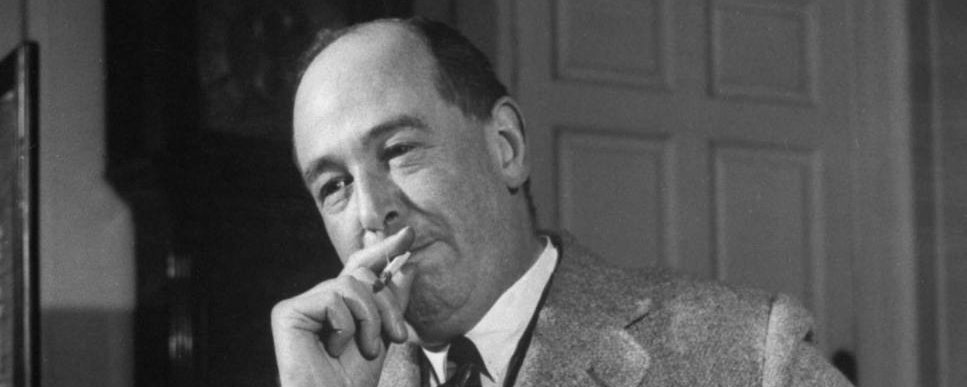
C.S. Lewis, in his 1943 work The Abolition of Man, delivered a stark warning about a society that abandons objective moral truths in favour of superficial “niceness” and emotional manipulation. He foresaw a world where the obsession with “being nice” erodes the human soul, producing “men without chests”, individuals devoid of courage, honour, and moral instincts, ripe for control by tyrants and propagandists (Lewis, 1943).
“And all the time—such is the tragi-comedy of our situation—we continue to clamour for those very qualities we are rendering impossible. You can hardly open a periodical without coming across the statement that what our civilization needs is more ‘drive,’ or dynamism, or self-sacrifice, or ‘creativity.’ In a sort of ghastly simplicity we remove the organ and demand the function. We make men without chests and expect of them virtue and enterprise. We laugh at honour and are shocked to find traitors in our midst. We castrate and bid the geldings be fruitful.”
This prediction perfectly captures the untold damage inflicted by today’s woke culture and the “be kind” brigade, which prioritise performative compassion over truth, leading to a manipulable, divided, and morally bankrupt society.
Lewis predicted our current situation by arguing that rejecting inherited moral law, the “Tao,” or universal code of virtue, doesn’t foster tolerance but creates vulnerability to external forces. In The Abolition of Man, he describes how education and culture, stripped of objective values, train people to value intellect and appetites alone, without the “chest” of trained moral sentiments. This results in a population that “can calculate everything and defend nothing,” easily shaped by propaganda, pleasure, and fear (Lewis, 1943). A clear modern summary of these ideas underscores their prophetic power, showing how subjectivism in education stunts moral development, suppresses responses to evil, and paves the way for inhuman control; mirroring the emotional fragility and division fostered by today’s woke enforcers (Free Indeed, 2022). Modern woke ideology embodies this: it enforces “kindness” through speech codes, cancel culture, and identity politics, but this niceness is hollow, surrendering standards that once gave compassion meaning. As Lewis warned, such a society becomes raw material for control, where human dignity is negotiable.

The damage from woke culture and the “be kind” movement is profound and irreversible. It has fractured society by promoting division under the guise of unity, labelling dissent as hatred and stifling free speech through censorship and social ostracism (Kaufmann, 2023). This leads to widespread mental illness, with woke adherents showing higher rates of depression and anxiety due to constant vigilance against perceived microaggressions and a toxic self-righteousness that alienates allies (Psychology Today, 2021). Institutions crumble as merit is replaced by equity mandates, eroding trust in education, media, and governance.
The “be kind” brigade’s insistence on subjective feelings over facts has enabled propaganda to flourish, turning compassion into a weapon for control and leaving society without the moral backbone to resist tyranny.
Lewis articulated this in his writings by critiquing modern education’s role in debunking values. He uses examples like textbook analyses that dismiss sublime experiences as mere emotions, training youth to reject the Tao. This, he says, produces “clever cowards” ruled by technicians or tyrants, a direct parallel to woke enforcers who police language and thought while claiming moral superiority (Lewis, 1943). His fictional companion piece, That Hideous Strength (1945), dramatises this through a technocratic organisation that manipulates society, mirroring how woke ideologies infiltrate corporations and governments today.
Lewis was not alone; contemporaries shared his concerns about moral relativism’s societal toll…
George Orwell, in Nineteen Eighty-Four (1949), depicted a world where language controls thought, much like woke culture’s redefinition of words to enforce conformity and suppress truth. Orwell warned of a “strict morality” imposed by elites, echoing Lewis’s fear of conditioners who abolish humanity through propaganda (Orwell, 1949).
Aldous Huxley, in Brave New World (1932), portrayed a society conditioned for superficial happiness, eliminating pain but also depth, similar to the “be kind” brigade’s erasure of objective standards for feel-good conformity. Huxley foresaw genetic and psychological manipulation leading to dehumanisation, aligning with Lewis’s abolition of man (Huxley, 1932).
Both reinforced Lewis’s view that abandoning moral absolutes invites totalitarian control. J.R.R. Tolkien did not directly comment on The Abolition of Man (1943) in surviving letters or writings, but evidence from his life, works, and documented views shows strong alignment with Lewis’s central thesis: the dangers of moral relativism, the rejection of objective values (the “Tao”), and the resulting creation of “men without chests”, people stripped of moral instincts, vulnerable to manipulation by technocrats and tyrants. Scholars and contemporaries frequently note that Tolkien shared Lewis’s deep suspicion of modern scientism, bureaucratic planning, and the dehumanising effects of abandoning traditional moral frameworks. For instance, Tolkien feared “democratic conditioners” and the “men without chests” who planned for planning’s sake, draining life of richness, echoing Lewis’s warnings in The Abolition of Man and its fictional extension, That Hideous Strength (1945).
Both men viewed unchecked modern science and technology as a double-edged sword, where “man’s power over nature” becomes some men’s power over others, leading to authoritarian control. Tolkien’s hatred of industrialisation (seen in the destruction of the Shire by Saruman’s forces) parallels Lewis’s critique of moral debunking in education, which produces calculative cowards ripe for tyranny. Their shared anti-relativist stance is evident in broader cultural critiques: both opposed the erosion of objective truth and virtue, seeing it as a path to societal collapse. While they disagreed on other matters (e.g., literary style, allegory, and theology), on the perils of moral subjectivism and its societal fallout, Tolkien’s worldview reinforced rather than contradicted Lewis’s prophetic alarm.
Lewis’s insights remain a brutal indictment: woke culture’s fake compassion has surrendered every standard, paving the way for society’s collapse.
References
- Free Indeed (2022) C.S. Lewis : The Abolition of Man Summary, YouTube video, 7 September. Available at: https://youtu.be/uxzX-iEDOsk (Accessed: 9 January 2026).
- Huxley, A. (1932) Brave New World. Chatto & Windus.
- Kaufmann, E. (2024) ‘Why woke people suffer with mental illness, depression & anxiety | Eric Kaufmann’, YouTube video, available at: https://www.youtube.com/watch?v=vwKs6eDKs7I (Accessed: 9 January 2026).
- Lewis, C.S. (1943) The Abolition of Man. Oxford University Press.
- Orwell, G. (1949) Nineteen Eighty-Four. Secker & Warburg.
- Walsh, C. (2022) ‘A Prophecy of Evil: Tolkien, Lewis, and Technocratic Nihilism’, The Upheaval, available at: https://theupheaval.substack.com/p/a-prophecy-of-evil-tolkien-lewis (Accessed: 9 January 2026).
- Calkins, E. K. (2021) ‘Minds of Metal and Wheels: Tolkien and Lewis on Science and Faith’, Northwestern Review, vol. 1, no. 1, available at: https://nwcommons.nwciowa.edu/northwesternreview/vol1/iss1/5 (Accessed: 9 January 2026).